The hustle culture promises that if you work hard enough, sacrifice enough, and grind long enough, success will come. But what if the metrics you are grinding toward are not actually the ones that matter?
For the first two decades of my leadership life, my success was measured by performance. I wore the exhaustion like a badge. I measured myself by the number of hours logged, the deals closed, the revenue generated. I told myself that God was honored by my sacrifice.
On paper, I was winning; but on the inside I felt nothing. No joy. No satisfaction. Just the quiet question: Is this it?
The Problem with the Hustle Culture
The hustle culture tells you that success is a function of input. More hours. More sacrifices. More grind. But God's Kingdom operates differently, and doesn't measure success on workload alone. Not because work is bad, but because we have the wrong definition of success.
The Biblical definition of success is faithfulness. Not outcomes. Faithfulness.
Matthew 25:21 does not say: 'Well done, you good and profitable servant.' It says: 'Well done, good and faithful servant.' The metric is faithfulness, not performance.
What Calling Looks Like Versus Hustle
Hustle is driven by a question: What do I need to achieve?
Calling is driven by a different question: What has God created me to do, and am I doing it?
Hustle measures success by revenue, scale, and external recognition; calling measures success by faithfulness, impact, and alignment with God's purpose.
Hustle asks: How big can I build this? Calling asks: How faithful can I be with what I have been given?
This does not mean calling produces small businesses. Abraham was extraordinarily wealthy. Solomon built an empire. Joseph ran the economy of Egypt. Calling and scale are not in conflict. But scale is a byproduct of faithfulness, not a goal in itself.
The Shift
Moving from hustle to calling is not a one-time event. It is a reorientation that happens over months and years. Here are the key shifts I have seen in leaders who make it:
From scarcity to abundance. Hustle is rooted in scarcity, people tend to work harder out of the fear that there is not enough; out of the fear of being left behind. Calling is rooted in the abundance of a God who owns 'the cattle on a thousand hills' (Psalm 50:10). You plan from provision, not from panic.
From comparison to collaboration. Hustle constantly measures itself against competitors. Calling understands that another leader's success is not your failure. Kingdom leaders build each other up because they understand they are on the same team, working for the same God to advance the same Kingdom.
From urgency to rhythm. Hustle runs on adrenaline. We rush to the next deadline, the next deal, the next crisis. Calling operates in rhythm, periods of intense work followed by rest, because rest is not laziness. It is trust that God will hold things while you take a step back.
From identity in outcomes to identity in Christ. This is the deepest shift. Hustle leaders are devastated by failure because their identity is wrapped up in their results. Called leaders can absorb failure, even significant failure, because they know who they are regardless of what they produced. When your identity is in Christ, failing does not make you a failure.
Martha and Mary
Luke 10:38-42 says: "As Jesus and his disciples were on their way, he came to a village where a woman named Martha opened her home to him. She had a sister called Mary, who sat at the Lord's feet listening to what he said. But Martha was distracted by all the preparations that had to be made. She came to him and asked, 'Lord, don't you care that my sister has left me to do the work by myself? Tell her to help me!' 'Martha, Martha,' the Lord answered, 'you are worried and upset about many things, but few things are needed — or indeed only one. Mary has chosen what is better, and it will not be taken away from her.'"
This week, ask the Lord to help you discern when to serve and when to sit at His feet. Faithfully steward what the Lord has blessed you with in this season, and remember: busyness is not productivity. It's better to do a few things the Lord has called you to do than to do many things out of your own will.
Discover your calling with Boaz Strategic →
Aaron D. Minard
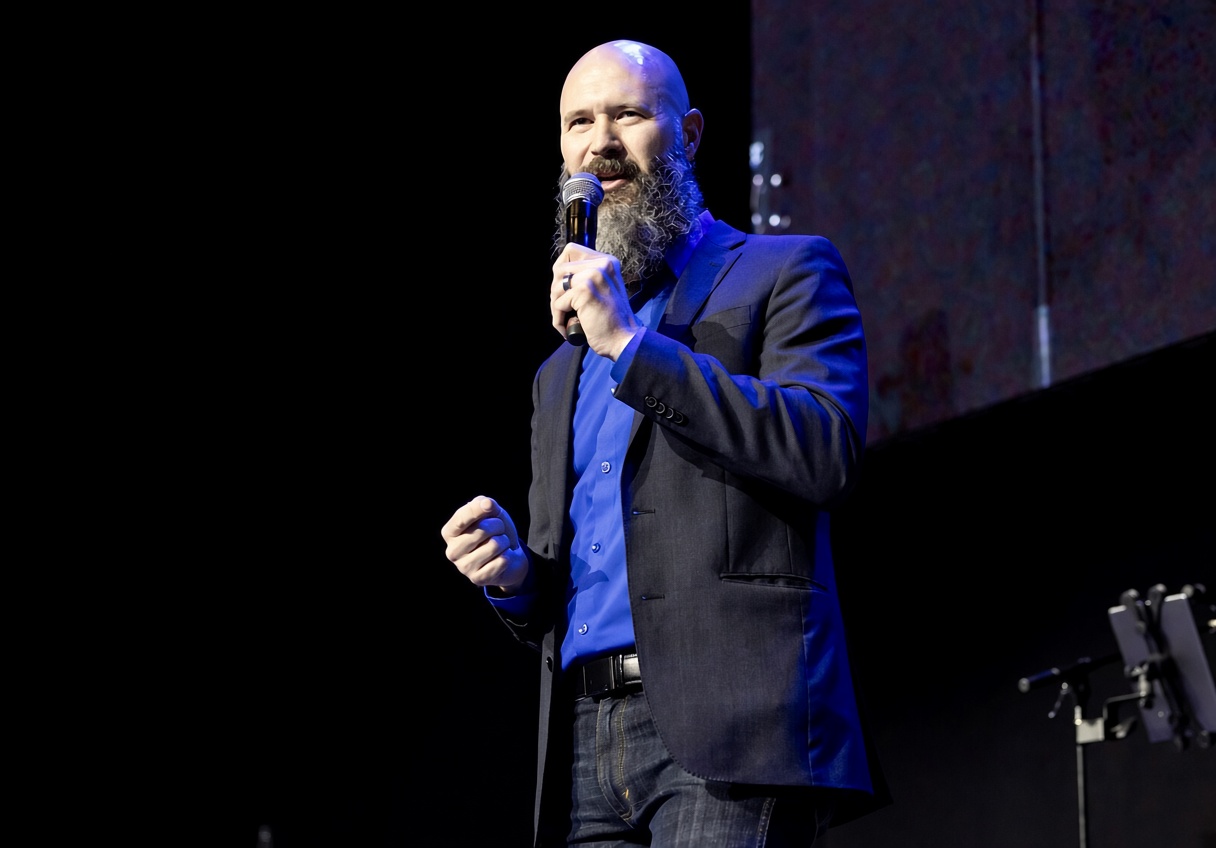
Aaron D. Minard is a Faith Driven Executive Advisor and co-founder of Boaz Strategic, where he turns the complexity of leadership into simple actionable steps.
Ready to take the next step?
Build something that matters.
Begin your journey with Boaz Strategic.
Start Onboarding